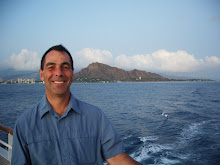
Let us take a look at passion other than the passion of love. Talking about the passion of being, a passion for life, the passion to do what inspires you the most.
We must recognize that every human being has in him a passion by which he may live. Passion is this breath of happiness, well being felt by ignoring any obligation to work for a living. You can do the work that you are passionate about and I would say that it is what we should all try to do.
Very often you make your survival at the expense of what drives you to meet the needs of your loved ones are act in the sense of duty. The sense of duty is too often the opposition of passion. The passion is to live what you are.
Passion does not refer to desires that you create or that you borrow by the influence of current society. The passion surpasses the dream. The passion comes from your gut, not your thoughts or your mind, much less any brainwash that you have suffered. Passion does not feed the emotions, it is the source of what you are. So you must give yourself the right to recognize your passion.
To recognize it, you will have to find it and you are absolutely right. The most surprising is that your passion has already manifested in your life and more than once. The events of your passion materialize at least: in childhood, adolescence and in the middle of your life.
Too often, your living environment has killed your passion. Too often you were told to stop dreaming. It is safer, more secure, to remain in the ranks of dissenters, the knowing environment. You have been brought to your responsibilities, like survival and ensure your presence at the expense of fulfilling your passion. You can make your passion while ensuring your survival and your responsibilities.
There are many people who make their living from their passion or who have guided their careers, their work around their passion. These people are usually happy, healthy and in harmony with themselves and with their environment. By cons, an even greater number of people repress their passion or operate outside of their work to the detriment of their environment by creating a delicate balance of life. Besides the fact that to achieve your passion outside of work takes time and inevitably the lack of time hit hard on your personal life and usually causes an emotional distance with people near you.
Why do you see so many career changes or shift work half-time of life?
Why so many separations in love or friendship or work at stage 40 and older? You will say that this is merely a question of positioning. Yes, true, but go to the bottom of the matter. Questioning on what? What you live, what has not spoken to you yet or a less favorable environment where it is difficult to carry you. Do we speak here not just your passion, your enthusiasm to be back in that area?
You always have the choice and you'll always be alone in deciding to recognize your passion and express it. Finding your passion is to return as an individual. It's not for nothing that very often the final manifestation of your passion occurs between 40 and 50 years. You can choose to respond, but know that deny or refuse to give life cause effects on your wellbeing, your health and quality of life with your family. Why so many "burn-out, depression, mental fatigue in individuals aged 40 and over? Dare to consider the answer will look upon you, which is in you, your passion.
Living his passion does not necessarily mean to question back your relationships with people and your workplace. Recognizing his passion will only require you to restore your frames of reference, to give you the means to express it. Recognize, identify and express his passion will require a commitment to yourself and walk into the unknown for some time.
You have your own passion. Go back to your childhood, your adolescence and remind yourself what your passion was, what inspires you, what made you lose track of time, which allowed you to feel that you exist beyond the shape.
Do you know what your passion is? If yes, how you managed to make it your livelihood?
Showing posts with label responsabilities. Show all posts
Showing posts with label responsabilities. Show all posts
Thursday, January 14, 2010


Wednesday, January 13, 2010
Logotherapy - An interesting approach
Source: Carole Thibaudeau. From the newspaper Le Soleil, Special Section No. 8, Le plaisir de vivre, October 98.
Viktor Frankl developed an approach to psychotherapy that he called the "logotherapy." (Logos in Greek means meaning.) In this approach, responsibility is regarded as the essence of human existence.
In logotherapy, the therapist tries to assert his patient what their responsibilities are. He has to choose what he wants to be responsible, to what or to whom. Therefore, the therapist speech is less likely that the traditional therapist to impose his values to his patients because he does not take responsibility for them.
A good way to set the mood "logotherapy" is to live as if this was the second time they were preparing to make the same mistakes. "Imagine that this is the past, and you have the power to change the past," Frankl offers. We are thus confronted with the limited nature of life and the finality of what made life and ourselves.
According to logotherapy, we can discover the meaning of his life in three ways.
First: through a work or a good deed.
Secondly, by experiencing something or someone. This may be the experience of goodness, truth, beauty, such as contact with nature or with a certain culture or what is even better to know the uniqueness of a human being through love.
The third way to find meaning in life lies in the attitude to take to unavoidable suffering. Placed in a desperate situation, it remains to the human freedom to choose what attitude to take to die with dignity, bear their suffering. "When you can not change a situation, an incurable cancer, for example, you have no choice but to transform.
"Suffering is not necessary to find meaning in his life. But we can find meaning even through suffering, if it is unavoidable. If it is not, however, you should eliminate the cause, whether psychological, biological or political. Agree to suffer unnecessarily is masochistic rather than heroism. But to accept suffering with courage to keep his life its meaning until the last moment it's your decision.
Calendar
"I am never tire of repeating that the only transitory aspects of life are those who are potential state, Viktor Frankl wrote. Updated, they become reality and they are preserved in the past where they are preserved forever. "
Frankl tells the metaphor of the calendar.
The pessimist is the person who sees with sadness his schedule shrink day by day. For cons, the person who brings enthusiasm to life's problems looks like the man who carefully preserves the pages of his calendar after scribbled a few notes on the back. He can look with pride and joy on all the wealth contained in these pages.
What does he grow old? Why regret his youth? He is fully aware of its rich past, which includes not only the reality of work and his loves, but also his sufferings bravely faced. It's still of his suffering that he is the most proud of, even if they can not inspire envy.
Subscribe to:
Posts (Atom)